What a T-valley is
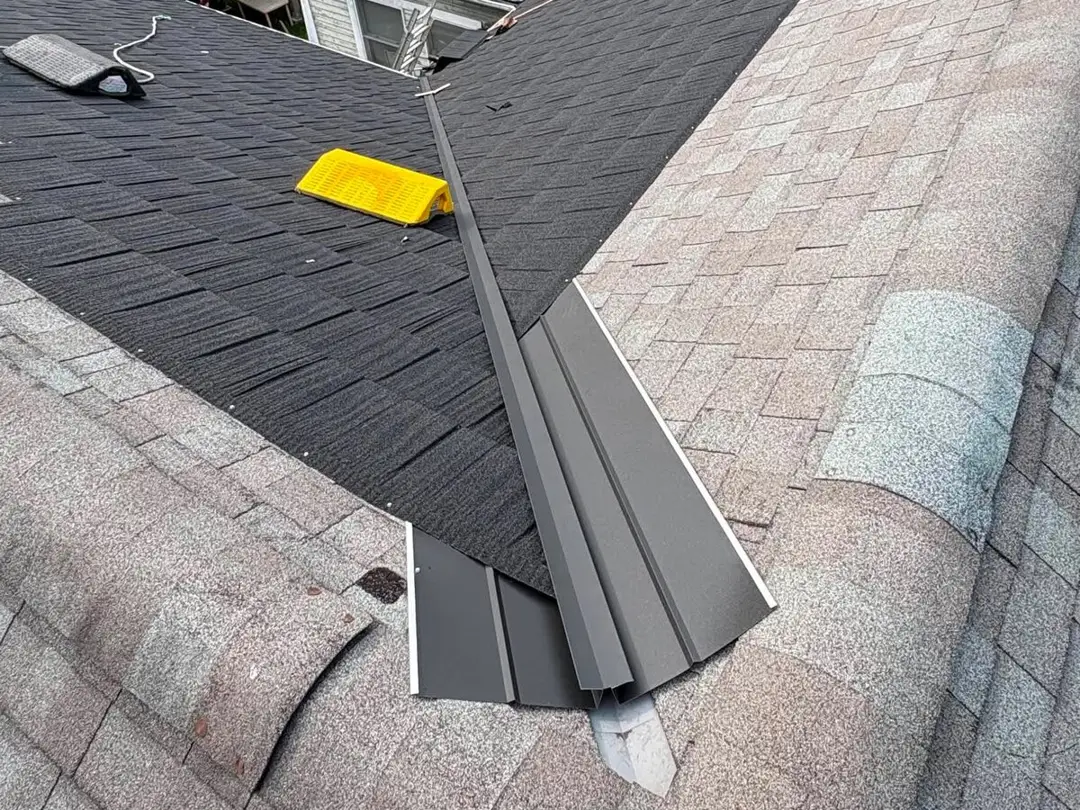
A T-valley is a length of formed metal flashing that lines the valley before the roofing panels go on. Seen from the end, it has wide flanges on each side and a raised rib down the centre, roughly the shape of an upside-down “T”.
The flanges collect water running off each slope and carry it down to the eaves. The centre rib keeps water from one slope from rushing across and forcing its way under the panels on the other side, which matters most in heavy rain and fast spring melts.
How it fits with stone-coated panels
The T-valley goes in first, underneath the roofing. The stone-coated steel panels on each slope are then cut and turned along the valley so water runs off them onto the flanges. On our installations, a matching stone-coated valley cap finishes the valley for a clean, continuous look.
You can see this sequence on the interactive 3D roof model on our homepage, which shows the T-valley and the path water takes through it.
Why valleys fail
Most valley problems come down to installation rather than materials:
- Valley flashing that is too narrow for the amount of water the slopes deliver
- Panels cut too close to, or too far from, the centre of the valley
- Fasteners driven through the part of the flashing that carries water
- Debris and ice building up in a valley that was not detailed to shed it
- Missing protection membrane under the valley where the system calls for it
Valleys and Ontario winters
Snow tends to collect in valleys and melt slowly, and freeze-thaw cycles keep water sitting there longer than anywhere else on the roof. A properly lined and flashed valley, with protection membrane underneath where it is called for, is one of the best defences against winter leaks.
What to look for in your estimate
Ask how valleys will be built: what flashing is used, whether new valley metal is included, and how the panels and valley cap are finished. On a roof with dormers or several gables, valleys can account for a significant share of the detail work, so they should be described clearly in a written quotation.
This guide is general information for homeowners. Product specifications, warranties and promotions are subject to the applicable written terms. Ask us about your specific roof.